Some redwood groves make you earn the payoff with a long drive and a steep climb. Armstrong Redwoods does the opposite. Three miles north of Guerneville, an 805-acre grove of old-growth coast redwoods sits just off the road, with flat trails that put thousand-year-old trees a half-mile stroll from the parking lot. This Armstrong Redwoods guide covers the trees worth finding, the trails worth walking, the fees and rules to know, and how to pair the grove with a Guerneville afternoon and a Russian River Valley tasting room.
At a Glance: Armstrong Redwoods in Brief
Here is the short version of this Armstrong Redwoods guide:
- Where: 17000 Armstrong Woods Road, Guerneville — about 3 miles north of town, roughly 90 minutes north of San Francisco
- What it is: An 805-acre reserve protecting one of Sonoma County’s last old-growth coast redwood groves
- Hours: Open daily from 8 a.m. until one hour after official sunset; the visitor center is open daily from 11 a.m. to 3 p.m.
- Fees: $10 per vehicle, $9 for vehicles with a passenger age 62 or older; free for pedestrians and cyclists
- Don’t miss: The Parson Jones Tree (the tallest in the grove, over 310 feet) and the Colonel Armstrong Tree (the oldest, estimated at more than 1,400 years)
- Best for: An easy, flat walk under ancient trees — good for families, wheelchair users, and anyone who wants redwoods without a strenuous hike
- Dogs: Leashed dogs are allowed only on paved roads and in picnic areas — never on trails
Why This Grove Feels Different
Armstrong Redwoods is a reserve, not a recreation park, and you feel it the moment the road narrows under the canopy. The light goes soft, the sound drops away, and the trees do the talking. Coast redwoods are the tallest living things on the planet, and this is one of the few places in Sonoma County where they still stand in old-growth numbers.
The grove exists because of a lumberman. In the 1870s, Colonel James Armstrong set this land aside as a natural park and botanical garden instead of harvesting it. After his death, his daughter and the Le Baron family campaigned for years to keep it standing; in 1917 Sonoma County bought the property for $80,000, the state took over in 1934, and the grove opened to the public in 1936. Its status changed to a natural reserve in 1964, so it is managed for protection first. That history is part of what makes an Armstrong Redwoods guide worth writing: this is a forest that was deliberately saved, tree by tree, by people who decided it was worth more standing than cut.
The grove gets about 55 inches of rain a year, and fog keeps it damp the rest of the year.
The Three Famous Trees on This Armstrong Redwoods Guide
Every trail in the grove leads to the same three landmarks.
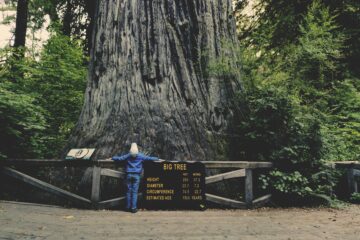
The Parson Jones Tree is the tallest tree in the grove, measuring more than 310 feet — longer than a football field — and it stands only about a tenth of a mile from the park entrance.
The Colonel Armstrong Tree is the oldest tree in the grove, estimated to be over 1,400 years old, a half-mile walk from the entrance along the Pioneer Nature Trail. It was already centuries old when Europeans first reached California.
The Icicle Tree is the odd one out. It is covered in burl formations — knotted growths that can weigh many tons and grow hundreds of feet above the forest floor. Nobody fully understands why burls form, which makes this tree the grove’s best conversation piece.
Between the three trees, this Armstrong Redwoods guide also points you to the Discovery Trail’s tree-hugging platform and Braille interpretive panels, and to the Redwood Forest Theater, a natural outdoor amphitheater in the heart of the grove — described by Sonoma County as a 1,200-seat amphitheater built in the 1930s with the feel of an ancient cathedral.
Trails: The Easy Loop and the Longer Climbs
The best way to see the grove — and the route this Armstrong Redwoods guide starts with — is the Pioneer Nature Trail, a mostly flat, ADA-accessible 1.5-mile round trip following Fife Creek past the Parson Jones and Icicle trees to the Colonel Armstrong Tree and the picnic area. It is an easy walk for kids, grandparents, and strollers. The Discovery Trail branches off it for a short, flat, wheelchair-accessible loop, and the Armstrong Nature Trail adds self-guided plaques about the forest. Together they make the gentle 1.7-mile outing this Armstrong Redwoods guide recommends for a first visit.
If you want a workout, the ridge trails climb out of the flat valley floor. The East Ridge Trail runs a 2.2-mile loop with a 400-foot climb from the front parking lot to the picnic area. The Pool Ridge Trail is a 2.3-mile loop with a 500-foot steady climb and switchbacks. Combining the two makes a 3.3-mile loop; longer routes into adjacent Austin Creek State Recreation Area run 5.6 and 9 miles. Whichever loop you choose, this Armstrong Redwoods guide suggests a cool morning start and plenty of water. The reserve’s official walks and hikes list lays out all nine suggested routes. Two things to know before you climb: the connector trail from East Ridge down to the Waterfall Trail is currently closed, and camping in Austin Creek is closed until further notice due to the Wallbridge Fire.
Planning Your Visit: Hours, Fees, and Practical Rules
The reserve is open daily from 8 a.m. until one hour after official sunset. The $10 vehicle fee applies whether the entrance kiosk is staffed or not — if no one is there, self-register at the station. Walk-in and bike-in entry is free, and California State Parks passes are accepted. The visitor center is open daily from 11 a.m. to 3 p.m., with exhibits and a small nature store whose proceeds support the park. Before you go, this Armstrong Redwoods guide recommends checking current hours and fees on the official California State Parks page.
The redwood root system is shallow and easily damaged, so stay on designated trails and do not cross the low fencing. Dogs must stay on a leash and are allowed only on the main paved road and in developed picnic areas — never on any dirt trail or dirt road. Bicycles are allowed on the paved road and the fire road only, and drones are not allowed anywhere in the park. Guided walks are available through Stewards of the Coast and Redwoods, the nonprofit that co-manages the reserve.
There are two picnic areas in the grove, with tables, grills, and restrooms near Fife Creek. The group picnic area sits three-quarters of a mile from the entrance and can be reserved for up to 150 people. Weekends fill up, and Mother’s Day is the busiest picnic day of the year, so arrive early. Bring layers and water, and download a trail map before you arrive — cell service is limited inside the grove.
Pairing the Grove with Guerneville and Wine Country
Armstrong Redwoods makes a natural half-day, and the other half writes itself. Guerneville is three miles south — a Russian River town of redwood-shaded streets, casual restaurants, and river beaches — and the obvious place for lunch after the grove. Santa Rosa, about 40 minutes east, is the base this Armstrong Redwoods guide recommends for a longer stay, with more hotels and restaurants; Visit Santa Rosa’s state park roundup puts Armstrong Redwoods at the top of its list of parks to visit from the city.
Wine country is the other half of the day this Armstrong Redwoods guide plans around. The grove sits in the middle of the Russian River Valley, known for pinot noir and chardonnay from cool, fog-influenced vineyards along the river, and the tasting rooms of West Sonoma and the Gravenstein Highway are nearby. Our Northern California wine country road trip builds a full itinerary around exactly this combination — redwoods in the morning, tasting rooms in the afternoon — and this Armstrong Redwoods guide follows the same logic: do the grove first, while the light is soft and the trails are quiet, then let the afternoon belong to Guerneville and the vineyards. If you are staying over, our Santa Rosa travel guide covers where to stay, the Schulz Museum, Railroad Square, and Russian River Brewing.
Armstrong Redwoods Guide FAQ
How long do you need at Armstrong Redwoods? Two to three hours covers the grove for most visitors following this Armstrong Redwoods guide: an hour on the Pioneer and Discovery trails, time at the visitor center, and a picnic or a quiet sit in the Forest Theater. Add an hour for a ridge loop, or a full day with Guerneville and wine tasting.
Is Armstrong Redwoods free to visit? Walking or cycling in is free. Driving in costs $10 per vehicle, or $9 if a passenger is 62 or older, and the fee applies even when the kiosk is unstaffed — self-register at the station.
Are dogs allowed at Armstrong Redwoods? Only on a leash, and only on the paved road and in developed picnic areas. Dogs are not allowed on any dirt trail or dirt road in the reserve or in Austin Creek. Plan a paved-road walk, or leave them at home for this one.
Is Armstrong Redwoods wheelchair accessible? Yes, for the main grove. The Pioneer, Discovery, and Armstrong Nature trails are wheelchair accessible, with accessible parking and restrooms near the entrance. The ridge trails are not accessible.
When is the best time to visit Armstrong Redwoods? The grove is good year-round. Spring brings wildflowers and mild weather, summer mornings are foggy and cool, and fall is drier with golden light. Winter is the quietest season, with rain-fed ferns and far fewer visitors.
Can you camp at Armstrong Redwoods? No. There is no camping inside the reserve, and camping in adjacent Austin Creek is currently closed until further notice due to the Wallbridge Fire. Plan a day trip and stay in Guerneville or Santa Rosa.
Conclusion
Armstrong Redwoods is the easiest old-growth redwood experience in Northern California: a flat, quiet grove of thousand-year-old trees, three miles from a river town and surrounded by wine country. You do not need a permit, a reservation, or a strenuous hike — just a morning, ten dollars for parking, and the willingness to walk slowly and look up. If you are planning a Sonoma County trip, this Armstrong Redwoods guide’s advice is simple: put the grove first. For more ideas, see our best weekend hikes in Northern California — then go stand under a tree that was already old when the Magna Carta was signed.