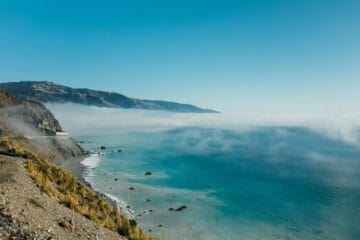
This Mendocino village guide is for first-timers heading to the bluffs of California’s North Coast: the best things to do in the village itself, the state parks that wrap around it, and a simple 1-day plan that fits it all in. Mendocino is a walkable New England-style village on a rocky peninsula, surrounded on three sides by state park — so the ocean is never more than a block away. Plan for about three hours of driving from the Bay Area, pack layers, and confirm hours and fees before you go.
At a Glance: Your Mendocino village guide in Brief
- Where: Mendocino County on Highway 1, on a peninsula jutting into the Pacific
- Don’t miss: The headland bluff trails, the Ford House visitor center, kayaking the Big River estuary, and the Point Cabrillo Lighthouse
- Best time: Fall for crisp, clear days; winter for storm-watching and gray whale migration (typically December through April); summer for cool marine-layer fog when the rest of California is baking
- Getting around: The village is walkable, but you need a car for the parks north and south of town — our California coastal road trip guide has the full San Francisco-to-Mendocino driving route
- Pets: Rules vary trail by trail — leashed dogs are welcome on some coastal paths but not on all state park trails, so check the current pet rules on each park’s page before you go
Walk the Headlands and Visit the Ford House
The anchor of any Mendocino village guide is Mendocino Headlands State Park, which wraps the village on three sides with miles of mostly flat bluff trails past sea arches, hidden grottos, and meadows of wildflowers in spring. You can walk straight from the shops on Main Street onto the paths, and there is no camping — visitors are day users only. Stay back from cliff edges, and note that State Parks prohibits drones on state park property.
Start at the Historic Ford House, the park’s visitor center on Main Street. Built in 1854 for Martha Ford, the bride of the first sawmill’s superintendent Jerome B. Ford — credited by many as the town’s founder — the house holds a scale model of Mendocino as it looked in 1890, historic photographs and logging-era relics, and videos on topics like gray whale migration that play on request at no charge. Volunteers staff the visitor desk and the Mendocino Area Parks Association gift corner there too. Grab a park map and walk west onto the bluffs.
Paddle the Big River Estuary
At the south end of the village, trails drop down to Big River Beach, part of a 7,400-acre wildlife corridor that links coastal and inland habitat into the largest piece of connected public land entirely within Mendocino County. The Big River estuary is one of the longest undeveloped estuaries on the northern California coast — a calm, wide river flanked by redwoods where harbor seals and river otters are often spotted.
The classic way to see it — and a highlight of this Mendocino village guide — is by kayak or canoe. The local outfitter Catch-A-Canoe rents kayaks, canoes, and distinctive redwood outrigger canoes near the beach — check their current rates and seasonal availability before you go, and time upriver paddles around the incoming tide. Bring layers: even on warm inland days, the estuary sits under cool marine air.
Climb Down to the Point Cabrillo Light Station
A few miles north of the village, the Point Cabrillo Light Station sits on a spectacular headland inside its own state historic park. For lighthouse fans, it’s the standout stop in this Mendocino village guide. Park at the gate off Point Cabrillo Drive, then walk the half-mile downhill access road to the light station buildings — the paved road is the easier route, and there is a dirt path through coastal prairie for variety.
The lighthouse itself holds the original Chance Brothers third-order Fresnel lens and remains an active aid to navigation. The main floor of the lighthouse, the 1930s-era First Assistant Lightkeeper’s House museum, and the Marine Science Exhibit (with a 240-gallon saltwater aquarium) are open to the public 11am to 4pm every day, while the park grounds are open from sunrise to sunset. Dogs on leash are welcome on the grounds, and the main floor of the lighthouse is dog-friendly. Lens climbs to the top are offered only on select weekends and are ticketed — check the Point Cabrillo calendar for the next scheduled dates.
Hike the Ecological Staircase at Jug Handle
A few miles north of town, Jug Handle State Natural Reserve protects one of the most complete records of ecological succession anywhere on earth — the most science-heavy hike in this Mendocino village guide. The Ecological Staircase Trail climbs 2.5 miles inland through five ancient wave-cut marine terraces, each uplifted from the sea about 100,000 years before the one below it.
The hike starts in lush forest along Jug Handle Creek, then steps up through increasingly odd landscapes until it reaches the famous pygmy forest — centuries-old cypresses and pines stunted to a few feet tall by ancient, nutrient-stripped soil. Round trip is more than 5 miles and takes about three hours. If you want the pygmy forest experience without the hike, Van Damme State Park (below) has a boardwalk-accessible grove.
Van Damme: Fern Canyon and the Pygmy Forest Boardwalk
Three miles south of Mendocino on Highway 1, Van Damme State Park packs a lot into one stop — a sheltered beach with a protected cove popular with kayakers, a lush fern-filled forest, and year-round camping, making it the easiest overnight option in this Mendocino village guide.
Two hikes define it. The Fern Canyon Scenic Trail follows Little River through a canyon of towering redwoods and hillsides covered in sword ferns, crossing the river on wooden bridges again and again. The pygmy forest boardwalk off Airport Road is a flat, quarter-mile, wheelchair-accessible loop through stunted dwarf trees, with interpretive signs explaining the ancient poor soils that created them — the easy version of the Jug Handle experience for anyone short on time or hiking legs. Dogs are not allowed on the trails here; the campground recommends reservations through ReserveCalifornia or 1-800-444-7275 for spring through fall.
Main Street: Shops, Galleries, and Where to Eat
Mendocino’s compact Main Street rewards a slow wander between parks. Visit California’s Mendocino village guide flags the local staples: the Gallery Bookshop, a beloved ocean-view bookstore; Out of This World, the science-and-toy shop birders hit for binoculars; and the Ford House’s visitor info and volunteers.
For food, the village is known for cozy Cal-French dining — Café Beaujolais, set in a bright yellow farmhouse, is the longtime local institution, and it’s a dinner stop in our Northern California wine country road trip if you want to pair the coast with wine country inland. For a casual day, grab picnic supplies at a local market and eat them on the headlands instead. Confirm hours before planning a meal around them.
Optional Add-Ons Near This Mendocino Village Guide
- Glass Beach, Fort Bragg (about 10 miles north): The famous sea-glass shoreline sits in and around MacKerricher State Park — look, don’t take, since all park features are protected by state law and may not be collected or disturbed.
- Russian Gulch State Park (just north): Redwood canyon, waterfall trails, and the churning Devil’s Punchbowl sinkhole.
- Mendocino Coast Botanical Gardens (Fort Bragg): 47 acres of coastal gardens ending in wildflower bluffs — worth the add if you garden or photograph flowers.
- Mendocino Music Festival (July): The headlands host the annual festival under its signature white tent.
Practical Details for This Mendocino Village Guide Trip
- Hours and fees: Point Cabrillo’s grounds are open from sunrise to sunset, with the lighthouse museum open 11am–4pm daily. State park day-use fees change — verify current amounts before you go.
- Weather: The coast is changeable year-round. Winter brings rain, summer brings marine fog that usually burns off by mid-morning, and fall is often the clearest season. Dress in layers every time.
- Road conditions: Highway 1 north of the Bay Area can see storm-related delays in winter. Our Pacific Coast Highway road trip guide has current road-condition advice — and always check Caltrans QuickMap or call 1-800-427-7623 before you drive.
- Whale watching: Gray whales migrate past the headlands from December through April; bring binoculars to the bluff overlooks.
- No drones: The Sonoma-Mendocino Coast District prohibits drone launches, landings, and operation on state park property.
- Source of truth: The state park pages linked in this Mendocino village guide are the most current source for hours, fees, and closures.
Mendocino Village Guide: A 1-Day Itinerary
- Morning: Start at the Ford House for maps and history — ground zero for this Mendocino village guide — then walk the headlands west and south to Big River Beach: about two hours of easy bluff trails with sea arches and ocean views.
- Midday: Kayak the Big River estuary (reserve ahead in season), or walk the Haul Road, then lunch back on Main Street.
- Afternoon: Drive north to the Point Cabrillo Light Station for the lighthouse museums and headland paths.
- Late afternoon: Pick one more — the Ecological Staircase at Jug Handle (allow three hours) or Fern Canyon and the pygmy boardwalk at Van Damme.
- Evening: Dinner in the village, then sunset on the headlands before driving out — the west-facing bluffs are the whole point of being here.
Mendocino village guide FAQ
How many days do you need in Mendocino? One full day covers the village, the headlands, and one big extra. Two days lets you add kayaking, Jug Handle, and Fort Bragg without rushing.
What is the best time to visit Mendocino? September through October is the sweet spot — often clear, mild, and less crowded. Winter is dramatic and great for whale watching, while summer is foggy and cool. In this Mendocino village guide, fall is the pick for first-timers.
Is Mendocino dog-friendly? Partially. Leashed dogs are welcome at Point Cabrillo and on many coastal trails, but not on all state park trails (including Van Damme’s). Check each park’s current rules before you go.
Is Mendocino worth the drive from San Francisco? Yes. A historic village, bluff hiking, a lighthouse, redwood canyons, and estuary kayaking within a few miles of each other — more variety per mile than almost any other three-hour drive from the Bay Area.
Keep Exploring California
Mendocino works best as the northern anchor of a Highway 1 trip: drive down from Bodega Bay, or pair it with wine country inland. However you slice it, this Mendocino village guide is built for a slow first visit — the weather changes hourly, and the best moments (whales off the bluffs, fog lifting off the headlands) come to whoever waits for them.