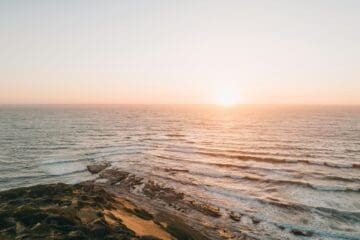
There’s a moment, driving Highway 1 into Morro Bay, when the 576-foot volcanic plug of Morro Rock rises out of the marine layer and the whole trip suddenly feels worth it. Sea otters bob in the harbor, fishing boats idle along the Embarcadero, and everything smells of salt and eucalyptus. This Morro Bay travel guide is your complete plan for the classic Central Coast harbor town — what to see, where to paddle, how to find the otters, and how to fit it all into one perfect day.
Whether you’re road-tripping between LA and San Francisco or basing yourself in SLO County, this Morro Bay travel guide covers the icons (Morro Rock, the Embarcadero), the wildlife (sea otters, peregrine falcons, shorebirds), the paddling (calm estuary kayaking), the wild half of the bay (Montaña de Oro State Park), practical details, and a 1-day itinerary you can follow as-is.
Morro Bay travel guide at a glance:
- Where: San Luis Obispo County, on Highway 1 midway between Los Angeles and San Francisco; the state park sits 13 miles west of San Luis Obispo
- Known for: Morro Rock, sea otters, a working fishing harbor, and some of California’s calmest paddling water
- Best for: 1-day trips, wildlife watching, couples, families, and leashed-dog road trips
- Don’t miss: sunrise or sunset at Morro Rock, otter spotting at South T-Pier, and the cliff views at Montaña de Oro
Morro Rock: Where Every Morro Bay Travel Guide Starts
Morro Rock is one of the Nine Sisters, a chain of volcanic plugs running from San Luis Obispo to the coast. The Rock is a protected state preserve and an active peregrine falcon nesting site — climbing it is prohibited by law, so plan to admire it from the base, which is honestly the better experience.
A causeway connects the Rock to the shore, with a big parking lot, a walkable beach, and tide-pooling at low tide. Go at sunrise or sunset for the best light and the most active falcons.
The Embarcadero: Harborwalk, Sea Lions & Seafood
This Morro Bay travel guide gives the Embarcadero a full morning, because it’s the beating heart of the working harbor town. The Harborwalk is a flat waterfront path running to Morro Rock’s parking lot — friendly to bikes, strollers, and pups, with otters swimming alongside it.
Pause along the walk for the harbor’s full cast: sea lions hauled out on docks, harbor seals, and rafts of sea otters drifting through the eelgrass. When hunger hits, the waterfront delivers the classics — locally harvested oysters, fish and chips, clam chowder, and Dungeness crab — at restaurants built for watching the bay while you eat. It’s also where the on-the-water adventures launch: kayak and paddleboard rentals, harbor cruises, whale watching excursions, and sportfishing trips.
Sea Otters: Where to See Them (and How to Watch Responsibly)
No Morro Bay travel guide skips the otters. The southern sea otter has been protected as threatened under the Endangered Species Act since 1977, and Morro Bay’s estuary is one of the best places on the California coast to watch them.
The reliable otter spots, straight from the local experts:
- South T-Pier: Just south of the Embarcadero restaurants, this little T-shaped pier is an otter hotspot — they congregate here to hunt along the bay floor. Bring a camera.
- The Harborwalk: Otters swim right alongside the pathway, especially in the calmer stretches near the Rock.
- Target Rock: At the entrance to Morro Rock’s parking lot, look toward the bay, not the ocean.
- From a kayak: Paddling quietly through the estuary is the most special way to see them — keep a respectful distance.
- From your dinner table: Many waterfront restaurants have floor-to-ceiling windows, and otters drift past while you eat.
One rule matters most: if an otter notices you, you’re too close. Back off and give it space to rest, groom, and feed — mother otters in particular burn enormous energy hunting for themselves and a single pup. Fun fact from the estuary scientists: a group of otters floating together is called a raft.
Morro Bay State Park: Kayaking, the Museum & Black Hill
For this Morro Bay travel guide, I’d block out a half day for the state park alone. The park sits on the south side of the bay with lagoon and bay habitats — and some of the most beginner-friendly paddling water in California. The marina rents kayaks and canoes — just check the tide schedule before you launch, since wind and incoming tides can complicate your return trip.
Don’t skip the Museum of Natural History, perched on a hilltop with exhibits on the estuary’s ecology, geology, Chumash history, and oceanography. Open daily 10am–5pm; $3 for adults, free 18 and under; the Junior Ranger program makes it a hit with kids.
Beyond the water: the Black Hill trail climbs through Monterey pines to a panoramic summit view, and the marina sits within two marine protected areas safeguarding the bay’s wildlife. The campground has 140+ sites for tents and RVs up to 35 feet, with some hookups and showers — reserve through ReserveCalifornia, since summer weekends book out.
Montaña de Oro: The Day Trip This Morro Bay Travel Guide Insists On
Ten miles south of Morro Bay, Montaña de Oro State Park is where the Central Coast shows its wild side. With over 8,000 acres and seven miles of shoreline, it’s one of the largest state parks in California — rugged cliffs, secluded coves, coastal plains, and the 1,347-foot Valencia Peak. The name means “Mountain of Gold,” for the golden wildflowers that bloom here in spring.
Start at Spooner’s Cove, the best-known beach, tucked across from the campground and the historic Spooner Ranch House. From there, the Bluff Trail traces the cliff tops past sea stacks, natural bridges, and tide pools. One heads-up: Corallina Cove access is currently closed indefinitely due to storm-damage erosion, so admire that stretch from the bluff above. Wildlife is everywhere — black-tailed deer, bobcats, raccoons, California quail, and black oystercatchers.
The Islay Creek Campground is primitive (47 sites, RVs to 27 feet, no hookups, showers, or dump station), and dogs are allowed leashed in campsites and on park roads only — not on trails or beaches, except Spooner’s Cove Beach. Pack food and water; the nearest gas and groceries are in Los Osos, four miles north.
Where to Stay
Staying overnight turns this Morro Bay travel guide’s 1-day plan into a relaxed two-day escape. Campers should aim for the state park campground — waking up inside the estuary beats any hotel view. Everyone else will find waterfront inns, motels, and B&Bs clustered along the Embarcadero and downtown, most within walking distance of the harbor. Summer weekends and holidays fill fast, so book ahead.
Your Morro Bay Travel Guide 1-Day Itinerary
This Morro Bay travel guide keeps the pacing relaxed — most stops are minutes apart, and Montaña de Oro is only about 20 minutes south of town.
- 8:00 AM — Morro Rock at sunrise. Walk the base of the Rock, scan for otters, and watch the falcons.
- 9:30 AM — The Embarcadero and Harborwalk. Stroll the waterfront, watch the sea lions, and browse the shops as they open.
- 11:00 AM — Kayak the estuary. Two calm hours on the bay is plenty — check tides, wear layers, give otters space.
- 1:00 PM — Seafood lunch on the waterfront. Clam chowder, fish and chips, or oysters with a bay view.
- 2:30 PM — Museum of Natural History and Black Hill. Learn the estuary’s story, then earn the panoramic summit view.
- 4:30 PM — Montaña de Oro. Drive south to Spooner’s Cove and walk the Bluff Trail in golden afternoon light.
- 6:30 PM — Sunset at Morro Rock. End where you started, then dinner back on the Embarcadero.
Short on time? Skip Montaña de Oro and beachcomb north of the harbor instead — you’ll still hit every essential.
Practical Info
- Parking: Large lots at Morro Rock and along the Embarcadero, plus day-use parking in the state park — check current fees on the official State Parks page before you go.
- Kayak rentals: Rentals are available at the state park marina and from outfitters along the Embarcadero. Hours and pricing are seasonal — check current details on the official sites, and always confirm tide conditions before launching.
- Dog rules: Dogs must be leashed in the state park campgrounds. For beach time, head to Morro Bay Dog Beach near Toro Creek Road. The Harborwalk is pup-friendly, but at Montaña de Oro, dogs are only allowed on Spooner’s Cove Beach — not on trails.
- What to pack: Layers are this Morro Bay travel guide’s golden rule. Summer days here can run 30 degrees cooler than inland, the marine layer burns off by midday, and the wind picks up most afternoons. Bring binoculars for otters and falcons, and download a tide chart app before you paddle.
FAQ
Can you climb Morro Rock? No — it’s prohibited by law. Stick to the base, beach, and viewpoints around this protected falcon nesting site.
How long do you need in Morro Bay? One full day covers the highlights with this Morro Bay travel guide’s 1-day plan. Two days lets you slow down: add a half-day paddle, a whale watching trip, and a full morning at Montaña de Oro.
Where can I see sea otters in Morro Bay? The most reliable spots are South T-Pier, the Harborwalk, and Target Rock at the base of Morro Rock — plus anywhere on the bay from a kayak. Waterfront restaurant windows count too. Keep your distance: if an otter notices you, you’re too close.
Is Morro Bay dog-friendly? Mostly, with rules. Dogs are welcome leashed in state park campgrounds, on the Harborwalk, and at Morro Bay Dog Beach near Toro Creek Road. They’re restricted at Montaña de Oro except for Spooner’s Cove Beach. Check each park’s current rules before you go.
When is the best time to visit Morro Bay? Spring brings wildflowers to Montaña de Oro (the park’s namesake), and fall has the clearest skies. Summer is lovely but expect marine-layer mornings and bigger crowds; winter is quiet and dramatic. Wildlife watching is good year-round.
Conclusion
Morro Bay is the Central Coast at its most classic — a volcanic landmark, a working harbor, otters in the eelgrass, and a state park where you can paddle before lunch and summit a peak by dinner. Bookmark this Morro Bay travel guide for your next Highway 1 trip: pair it with my Pacific Coast Highway road trip guide to slot Morro Bay into the full drive, browse more California coastal road trip routes if you’re building a longer itinerary, or check the family-friendly California coast itinerary if the kids (or Louie) are coming along.