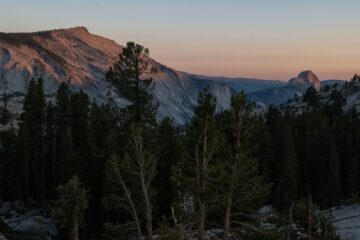
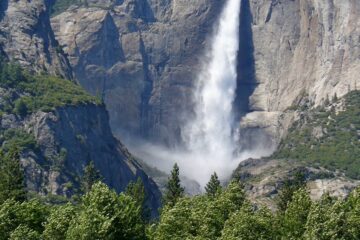
Yosemite in winter is a different park. The crowds thin out, the granite walls catch fresh snow, and the valley floor slows to a quieter pace. High-country roads close for the season, and a snowstorm can change driving plans overnight. This Yosemite in winter guide covers what stays open, what closes, how chain rules work, and how to plan a trip that fits the season.
At a Glance: A Yosemite in Winter Guide
Winter conditions are common from November through March, though snow can arrive earlier or linger later. Valley daytime highs average around 50 degrees Fahrenheit, with lows near 30, and snow is usually present above 6,000 feet even when the valley floor is bare. That split is the key: the valley stays accessible while the high country goes quiet under snow.
- Yosemite Valley, Wawona, Crane Flat, and Hetch Hetchy are drivable year-round, though tire chains may be required.
- Tioga Road and the full Glacier Point Road close to vehicles for winter, typically from sometime in November until late May or June.
- Badger Pass Ski Area is open from about mid-December through March.
- The Ahwahnee and Yosemite Valley Lodge stay open year-round.
- Four campgrounds stay open in winter: Upper Pines, Camp 4, Hodgdon Meadow, and Wawona.
- Always carry tire chains from November through March, including in four-wheel-drive and rental vehicles.
- Before driving, call the park road line at 209-372-0200 (press 1, then 1).
Use this Yosemite in winter guide as a starting point, then confirm road status and chain controls on travel day.
What Winter Changes in Yosemite
The biggest change is access, not scenery. Yosemite Valley sits at about 4,000 feet, so it often escapes the deepest snow, while roads above 6,000 feet close or require chains. Tioga Road, the Highway 120 route through the high country, usually closes due to snow from sometime in November until late May or June, removing the park’s east-west crossing for the season. Glacier Point Road also closes to vehicles for winter, though the stretch to Badger Pass is plowed while the ski area operates. That access split defines this Yosemite in winter guide: plan around the valley and Badger Pass, not the high country.
Services narrow in winter: some seasonal lodges and campgrounds close, dining is more limited, and visitor-service hours can shift, so check current hours before counting on a specific facility. The free valley shuttle still runs, but there is no bus service outside the valley in winter except to Badger Pass; holiday weeks are the exception, when crowds return and lodging books up.
Valley-floor trails may be mostly snow-free after mild stretches, but most trails elsewhere should be expected to be snowy or icy. Traction devices and trekking poles help on icy paths, and a flashlight, extra water, and extra layers belong in every winter daypack. Bears remain active in winter, so store food properly and keep a respectful distance.
Yosemite in Winter Guide to Roads and Chain Rules
Roads deserve the most attention on a winter trip, and this Yosemite in winter guide puts them first for a reason. Three entrances stay open year-round: Highway 120 from the west (Big Oak Flat Road), Highway 140 from Merced (El Portal Road), and Highway 41 from Fresno (Wawona Road). Highway 140 is the lowest-elevation approach and tends to need chains least often, making it the most reliable choice in a storm, though no route is guaranteed in severe weather.
Chain rules are strictly enforced. In a chain control area, every vehicle must carry chains or cables, including four-wheel-drive and rental vehicles, which are not exempt. California uses three levels: R-1 exempts lighter passenger vehicles with snow tires on at least two drive wheels; R-2 exempts only four-wheel-drive vehicles under 6,500 pounds with snow tires on all four wheels; R-3 has no exceptions. The speed limit inside a chain control area is 25 miles per hour, and the fine for failing to install chains when required can reach $5,000.
Buy chains sized to the vehicle’s tires before the trip, and practice installing them at home. Chains, cables, and tire socks are legal traction devices, but plastic devices and straps are not. If chain controls are a deal-breaker, YARTS buses run into the valley from Highway 140 communities such as Mariposa and El Portal for a fee. For the latest status, the National Park Service current conditions page lists planned closures, and the recorded road line at 209-372-0200 (press 1, then 1) carries same-day chain information.
Things to Do: A Yosemite in Winter Guide to Snow Days
Winter rewards visitors who slow down, and this Yosemite in winter guide focuses on valley-floor days plus one snow-sports base. Short walks to Lower Yosemite Fall, around Cook’s Meadow, or out to Mirror Lake are manageable in most conditions. The Yosemite Museum and the Valley Visitor Center offer indoor exhibits and free films, a break on a cold or stormy afternoon. The ice rink at Curry Village puts skaters under views of Half Dome and Glacier Point; check current session times and prices before going.
Badger Pass is the center of the park’s snow sports. Open from about mid-December through March, it offers downhill skiing and snowboarding plus groomed cross-country and snowshoe routes, with rentals and lessons available. Marked winter trails are also available in the Glacier Point Road, Mariposa Grove, and Crane Flat areas; travelers heading elsewhere should be prepared for avalanche terrain and strong route-finding. A valley-to-Badger Pass shuttle runs while the ski area is open, but seats are limited.
February brings the firefall at Horsetail Fall, when the setting sun can light the seasonal waterfall on El Capitan for a few minutes on clear evenings. The window runs from mid to late February and depends entirely on clear skies and enough water flow, so it is never guaranteed. For dates, viewing rules, and parking details, this Yosemite in winter guide points readers to our Yosemite Firefall guide.
Where to Stay and Camp in Winter
For lodging, this Yosemite in winter guide recommends staying inside the park when possible, since it removes the daily drive over a mountain pass. The Ahwahnee and Yosemite Valley Lodge both stay open year-round, with reservations available 366 days ahead, strongly recommended around holidays. Curry Village and other seasonal lodging run seasonally, and the Wawona Hotel is currently closed, so confirm what is open for trip dates on the National Park Service lodging page.
Gateway towns on Highway 140, including Mariposa and El Portal, are practical alternatives, since that route is less likely to require chains. East-side towns are not an option in winter while Tioga Road is closed.
Winter camping is possible but Spartan. Four campgrounds remain open: Upper Pines and Camp 4 in the valley, Hodgdon Meadow northwest of the valley, and Wawona to the south. For winter campers, this Yosemite in winter guide recommends Upper Pines first: it is the largest valley campground, with reservations released five months ahead on the 15th at 7:00 a.m. Pacific time through Recreation.gov. Expect cold nights and possible snow on tent sites. For broader Sierra camping ideas, see our guide to camping in Northern California.
Practical Tips for a Yosemite Winter Trip
Pack for mountain winter, even if the forecast looks mild. Layers, a waterproof shell, warm hat and gloves, and waterproof footwear matter most, since valley temperatures can swing from a sunny afternoon to a freezing night. Wool or synthetics keep warmth when wet, unlike cotton. Carry a headlamp with extra batteries, water, and high-energy food, and tell someone the group’s route and return plan.
A second habit this Yosemite in winter guide recommends: check conditions twice, once while planning and again on departure morning. The National Park Service winter FAQ summarizes seasonal access, chain expectations, and open campgrounds, while the National Park Service tire chain page explains R-1, R-2, and R-3 in detail. Entrance fees and seasonal requirements should be checked current before arrival. Families with young children will find the valley floor easy to navigate; our guide to California with a baby or toddler covers its stroller-friendly paths.
Finally, build slack into the itinerary. A storm can close a road, delay a drive, or hide a viewpoint in fog, and the best winter trips leave room for a slow morning or an unplanned afternoon at the ice rink. Winter in Yosemite rewards flexibility more than a packed schedule.
Frequently Asked Questions
Is Yosemite open in winter?
Yes. The park is open year-round, and Yosemite Valley, Wawona, Crane Flat, and Hetch Hetchy are drivable all year. What closes are the high-country roads: Tioga Road and the full Glacier Point Road. Badger Pass operates from about mid-December through March.
Do I need tire chains to visit Yosemite in winter?
Expect to need them. Chains are often required inside and outside the park from November through March, and every vehicle in a chain control area must carry them, including four-wheel-drive and rental vehicles. Whether they must be installed depends on the control level and the vehicle. This Yosemite in winter guide recommends buying chains before the trip and checking the road line at 209-372-0200 on travel day.
What is the best month to visit Yosemite in winter?
December through March is the core snow season, with Badger Pass open from mid-December through March. January and February tend to bring the most reliable snow, and mid to late February adds the firefall window at Horsetail Fall. Early winter is quieter but snow cover is less certain.
Where should I stay for a winter trip to Yosemite?
As this Yosemite in winter guide notes, Yosemite Valley Lodge and The Ahwahnee are the year-round in-park options, booking up early around holidays. Upper Pines campground stays open all year for campers with reservations. Gateway towns on Highway 140, such as Mariposa and El Portal, are the lowest-elevation alternatives.
Can I drive across Yosemite on Tioga Road in winter?
No. Tioga Road is usually closed due to snow from sometime in November until late May or June, so there is no vehicle crossing of the Sierra through the park in winter. Travelers heading to the Eastern Sierra need a much longer alternate route.
Conclusion
Winter strips Yosemite down to its essentials: granite, snow, quiet trails, and a valley far from the summer crowds. The trade is real — closed high-country roads, chain controls, shorter days — but the reward is a slower-paced park that photographs beautifully in winter light. Use this Yosemite in winter guide as a checklist: plan around the roads, carry chains, book lodging early, and leave room for weather. With those pieces in place, a winter trip here can be calmer, simpler, and every bit as memorable as a summer visit.