Lompoc (say it Lom-poke) is the Central Coast town that does three things no other town in California does at once: it paints its history on its walls, it grows the flowers that end up in seed catalogs around the world, and it watches rockets go up from the base next door. Add a fully restored Spanish mission, a cool-climate wine region, and a wild beach at the end of a 14-mile road, and you have a town worth a full day. This Lompoc travel guide covers the murals, the mission, the flower fields, the wine, the launches, and Jalama Beach.
Lompoc Travel Guide at a Glance
- Where: Santa Barbara County on Highway 1 and Highway 246, 55 miles north of Santa Barbara and 60 miles south of San Luis Obispo, 9 miles from the shoreline
- Best for: Mural walks, mission history, flower season, Sta. Rita Hills wine tasting, rocket launch watching, and Jalama Beach
- Do not miss: The Old Town murals, La Purisima Mission State Historic Park, and the Jalama Burger at Jalama Beach
- Good to know: Flower fields are working farms — look, do not enter or pick; Vandenberg has no public viewing on base, and launches are often scrubbed
- Getting there: Drive Highway 1; the town is about 155 miles north of Los Angeles
The Old Town Murals
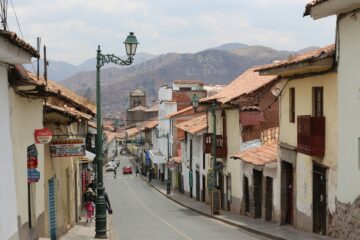
The best place to start any Lompoc travel guide is on foot in Old Town, looking up. More than 30 murals depicting town history cover the historic downtown, and a mural map is available from the Lompoc Valley Chamber of Commerce & Visitors Bureau. The first mural was commissioned in 1990, and the Lompoc Mural Society formed in August 1988 after Gene and Judy Stevens saw a mural town in British Columbia. The Old Town Heritage Walk runs about a mile with 18 stops — allow at least an hour.
Five murals anchor the walk in this Lompoc travel guide. Flower Industry, the first, stands at 102 W. Ocean Avenue, painted in 1990 by Art Mortimer. An Artist Cottage at 119 E. Cypress Avenue marks the entrance to Cypress Gallery, home to 60-plus local artists. The Price of Freedom at 125 S. H Street, painted in 2000 by Eliseo Art Silva, honors service members in 15 wars and conflicts of the 20th century. Temperance at 137 S. H Street recalls that Lompoc was a temperance colony from 1874 until incorporation in 1888. Chumash Indians at 126 E. Ocean Avenue depicts dome homes and tomol boats. A mural map is available from the Chamber of Commerce.
La Purisima Mission State Historic Park
La Purisima Mission is the historical heart of this Lompoc travel guide. Mision la Purisima Concepcion de Maria Santisima was founded on December 8, 1787, by Father Fermin Lasuen, the 11th of California’s 21 missions, on Chumash (Purisimeño) land. Earthquakes and rains in 1812 destroyed the original buildings, and the mission moved 4 miles northeast across the Santa Ynez River, rebuilt in a linear layout with 4.5-foot adobe walls. Secularized in 1834, it fell to ruin before a 1930s CCC and NPS restoration, and was dedicated as a State Historical Monument on December 7, 1941. It is considered the most completely restored mission in California — 10 original buildings fully restored and furnished — and a National Historic Landmark since 1970. The park covers roughly 1,934 acres with 25 miles of hiking and equestrian trails.
The mission is at 2295 Purisima Road, phone (805) 733-3713. It is open daily 9am to 5pm, with the historic buildings open 9am to 4pm, the Visitor Center Tuesday through Sunday 10am to 4pm, and trails 6am to sunset. It is closed on Thanksgiving, Christmas, and New Year’s Day. Admission is free, and parking is $6 per vehicle. What to see: the church, the padre residence, the 325-foot shops and quarters building, the blacksmith shop, the gardens, livestock, the water system and aqueduct, the visitor center, and the gift shop. Guided tour schedules vary, so check the current schedule before you go. For the full history, see the California State Parks La Purisima Mission page.
Flower Fields and the Flower Festival
Lompoc calls itself the City of Arts and Flowers, and the flower half of that name is a working industry, not a garden. The flower-seed industry has flourished here since 1896. The fields grow stock, larkspur, delphinium, sweet pea, and Bells of Ireland, among others, and lavender peaks in early June. Blooms run late spring through summer, typically late April or May through July or August, peaking in May and June. Exact field locations rotate yearly with the crops, so use the Explore Lompoc Flower Tracker map before driving out. A good viewing drive runs west on Ocean Avenue to Floradale, then between Floradale and Central, with more fields along Highway 246 and Purisima Road near the mission. The fields are working commercial farms — do not enter them or pick flowers.
The Lompoc Valley Flower Festival has run since 1952 at Ryon Park, on the last full weekend in June, Wednesday through Sunday. The 2026 festival ran June 25 to 28, with a carnival, arts and crafts, food booths, vendors, live entertainment, a flower show, and a Saturday parade. Admission in 2026 was $7 for ages 12 and up, $5 for ages 6 to 11, and free for ages 5 and under, with no pets in the park during the festival. 2027 dates were not verified, so check current dates before planning a trip around it. The festival is the flower season peak in this Lompoc travel guide.
Sta. Rita Hills Wine
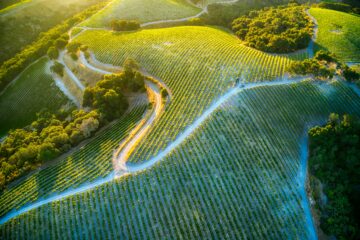
The Sta. Rita Hills AVA, established in 2001, is the wine story of this Lompoc travel guide — a cool-climate region between the Santa Rosa Hills to the south and the Purisima Hills to the north, known for Pinot Noir and Chardonnay (and Syrah), with nearly 30 wineries and tasting rooms on the Lompoc Wine Trail.
Three clusters make it easy to plan a Lompoc travel guide wine day. The Lompoc Wine Ghetto, off Highway 1 and 12th Street, holds small-production tasting rooms, mostly open Friday through Sunday — names include Camins 2 Dreams, Domaine de la Cote (appointment only), Sandhi Wines (reservations), Flying Goat Cellars, and Fiddlehead Cellars. Midtown holds Brewer-Clifton (appointment only) and Longoria Wines, founded in 1982 and open daily. The Sta. Rita Hills Wine Center, just outside downtown, puts four wineries under one roof. Estate wineries out in the hills include Sanford Winery & Vineyards (open daily 10am to 4pm), Melville, Babcock, and Foley Estates. Tasting fees and hours were not verified across the board — check current hours and reservations, and do not quote prices. For the trail and current listings, see the Explore Lompoc wineries page.
Rocket Launches and Vandenberg
Vandenberg Space Force Base sits next to Lompoc, and launches are the town’s wild card in this Lompoc travel guide. There is no public viewing on the base itself — it is an active military base. Launches are visible from public spots around Lompoc when the sky is clear, and delays and scrubs are common, so never build a whole trip around a single launch time.
Public viewing spots include Beattie Park (lawns, picnic tables, restrooms, playground), Ocean Park (coastal, limited parking, closes at sunset), Allan Hancock College (about 9 miles from the launch site, partial pad view), 13th Street and Arguello Boulevard (closest views of SpaceX launches), and Floradale Avenue and W. Ocean Avenue (the officially designated viewing site for Space Launch Complex 6). The Space and Missile Technology Center (SAMTEC), in the historic Marshallia Ranch Clubhouse on base at 1335 San Antonio Road W, covers Cold War missile history through modern satellite and commercial launch history in 1 to 2 hours. Public hours are Thursday and Friday 11am to 5pm plus the first and third Saturdays; you must check in at the gate with proper ID, arrange the visit in advance, and confirm current entry requirements. For launch viewing spots and the technology center, see the Explore Lompoc space country guide.
Jalama Beach County Park
Jalama Beach is the payoff at the end of this Lompoc travel guide. Take Highway 1 about 4.5 miles south of Lompoc, turn onto Jalama Road, and follow the 14-mile scenic winding road to the coast — about a 30-minute drive from town. The park at 9999 Jalama Road has 107 ocean-view campsites (31 with electric hookups) and 7 beachfront cabins, with reservations through Santa Barbara County Parks. Day use is $10 per vehicle, and dogs are $3 per dog per day. Dogs are allowed on the beach and in designated campsites, on leash (maximum 6 feet) at all times, with rabies vaccination proof required — and they are not allowed in cabins or on park trails. Campsite rates were not firmly verified, so check current rates before booking.
The Jalama Beach Grill sits on site, open daily for breakfast, lunch, and early dinner, and the Jalama Burger is the famous order. Expect high winds and rough surf; lifeguards are on duty in summer only, and you swim at your own risk. Beach caves sit about a mile north at low tide. For official park details, see the Santa Barbara County Jalama Beach page.
Surf Beach, Ocean Beach, and the Snowy Plover
Surf Beach is the wild card beach in this Lompoc travel guide, at the west end of Ocean Avenue (Highway 246), reached through the Amtrak Surf Station parking lot and open 8am to 6pm daily. It is part of the Vandenberg State Marine Reserve — no fishing — and surfing and bodyboarding are discouraged. There are no lifeguards, so never swim alone. From March 1 through September 30 each year, Surf Beach and nearby beaches are restricted to protect the threatened western snowy plover. During the season, the public can use a designated half-mile section of Surf Beach; dogs, horses, and kites are prohibited, and leashed dogs are allowed only on the trail connecting Surf Beach and Ocean Park, not on the open beach. From October through February, pets are allowed on leash. Entry into posted restricted areas counts as a violation, with fines up to $5,000. Always check the current beach status. For the official restrictions, see the Vandenberg Space Force Base environmental page.
Ocean Beach Park, 13 miles west of Lompoc, is the only other beach access in the area. Its beach access is closed March 1 through September 30 for snowy plover nesting, and fishing is prohibited at all times.
Where to Stay and Eat
Lompoc has 12 hotels, and this Lompoc travel guide keeps the list to verified names. The O Cairns Inn & Suites at 940 E. Ocean Avenue is family-run, with a cafe and bar, an outdoor pool, and free breakfast. The Village Inn at 3955 Apollo Way in Vandenberg Village is a mid-century boutique with a pool, a restaurant, and pet-friendly rooms. Also in town: the Lotus of Lompoc, the Red Roof Inn, and the Inn at Highway 1. Hotel rates are date-dependent and were not verified — do not quote prices.
For eating, Old Town Kitchen & Bar, Valle Eatery + Bar, Happy Mediterranean Restaurant, Susi Kitchen, La Botte Italian Restaurant, and the Solvang Brewing Company taproom in Lompoc are all verified as operating, though hours and menus were not verified. The Jalama Beach Grill and its Jalama Burger are the one food stop this Lompoc travel guide vouches for by name.
Best Time to Visit and Getting Around
The warm-weather window in this Lompoc travel guide runs late June through late September, with the clearest month August and the hottest month September (average high about 72 to 73°F). Flower peak in May and June, plus the festival in late June, is the signature window; fall (September to October) is warmest and clearest for wine and beaches. Fog and marine layer are common on the coast on summer mornings — bring layers.
Distances in this Lompoc travel guide: Lompoc is 55 miles north of Santa Barbara, 60 miles south of San Luis Obispo, 155 miles north of Los Angeles, and 270 miles south of the San Francisco Bay Area. Drive times were not reliably verified, so use the distances and check current routing rather than quoting a time. Solvang is the nearest wine-country town to the east, and Santa Barbara and Pismo Beach anchor the coastal road trip south and north — see the Wandering California California coastal road trip and the Pacific Coast Highway road trip guide for the route context, and where to sleep in your car in Santa Barbara for the nearest overnight camping options south of town.
Lompoc Travel Guide FAQ
How do you pronounce Lompoc? Lom-poke. The name comes from the Chumash, variously translated as lakes or lagoons.
When is the Lompoc Flower Festival? The last full weekend in June at Ryon Park, Wednesday through Sunday. The 2026 festival ran June 25 to 28. Check current dates for the next year before planning around it.
Can I watch a rocket launch from Lompoc? Yes, from public spots like Beattie Park, Ocean Park, and 13th Street and Arguello Boulevard — not from the base itself. Launches scrub often, so treat it as a bonus, not a plan, is the standing advice in this Lompoc travel guide.
Is Jalama Beach dog-friendly? Yes, with rules: dogs on leash (maximum 6 feet) on the beach and in designated campsites, $3 per dog per day, rabies proof required, and no dogs in cabins or on park trails.
Is La Purisima Mission free? Yes — admission is free, with parking at $6 per vehicle. It is open daily 9am to 5pm, and it is the best free stop in this Lompoc travel guide.
The Bottom Line
Lompoc rewards the traveler who slows down for it. This Lompoc travel guide comes down to a walk through the murals, a quiet hour at the most completely restored mission in California, a drive past the flower fields, a tasting in the Santa Rita Hills, and — if the sky cooperates — a rocket climbing over the coast. End it at Jalama Beach with a burger, and you have the Central Coast at its least crowded.