Arcata is a small North Coast college town of about 18,000 residents on the north end of Humboldt Bay, home to Cal Poly Humboldt, and this Arcata travel guide treats it as the most walkable stop on the Redwood Coast. It is known for sustainability, redwoods, and a downtown you can cross on foot in minutes, and it carries the nickname “Sixties by the Sea” with a straight face. The draw is not one big attraction but the combination: a historic plaza and Saturday farmers market, a 307-acre marsh full of birds, and a 790-acre redwood forest a few blocks from downtown, with beaches and bigger redwood parks a short drive away. This Arcata travel guide covers the plaza, the marsh, the forest, and the beaches in the order that makes sense on foot.
One full day covers the plaza and market, the marsh, and the community forest. Add a second day for a redwoods day trip and the coast. Arcata is about five hours’ drive from San Francisco on US 101, and the California Redwood Coast–Humboldt County Airport is nine miles away in McKinleyville, with flights from San Francisco, Los Angeles, Denver, Seattle, Las Vegas, Burbank, and Provo.
At a Glance
- Why come: a walkable college town pairing a historic plaza with two standout free nature sites — the pitch for this Arcata travel guide in one line
- Best for: travelers using this Arcata travel guide to plan a relaxed Humboldt Bay basecamp
- Top stops: Arcata Plaza and Farmers’ Market, Arcata Marsh and Wildlife Sanctuary, Arcata Community Forest, Mad River Beach, Cal Poly Humboldt Natural History Museum
- Day trips: Eureka about 6 to 7 miles south; Trinidad 16 miles north; Prairie Creek Redwoods State Park about a 40-minute drive
- Best time: early July to early September for the driest, clearest weather
- Where to stay: the historic Hotel Arcata on the Plaza, the Front Porch Inn bed-and-breakfast, or name-brand hotels in town — the stays this Arcata travel guide names
Arcata Plaza and the Farmers’ Market
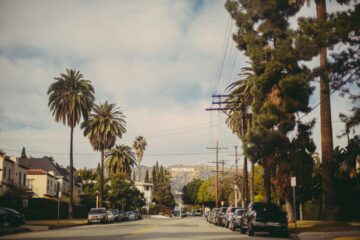
Start this Arcata travel guide at the Arcata Plaza, the central town square marked by two towering palm trees and ringed by well-preserved Victorian buildings with coffee shops, cafes, and boutiques. Jacoby’s Storehouse, an 1857 three-story mercantile, is the landmark building on the square. The plaza is the town’s living room, and it is at its best on Saturdays, when the Arcata Plaza Farmers’ Market runs year-round, rain or shine: April through November from 9 a.m. to 2 p.m., and December through March from 10 a.m. to 2 p.m., with more than 70 local farmers and makers at peak season, run by the North Coast Growers’ Association.
Park near the plaza and walk from here. The shops, the Cal Poly Humboldt campus, the community forest, and the marsh are all within walking distance or a short drive, which is the whole point of staying in Arcata rather than passing through — and the main practical tip in this Arcata travel guide.
Arcata Marsh and Wildlife Sanctuary
The Arcata Marsh and Wildlife Sanctuary is 307 acres at the north end of Humboldt Bay, and it is the most unusual stop in this Arcata travel guide: the city’s innovative wastewater-treatment facility doubling as a wildlife habitat. About five miles of walking and biking paths run through freshwater and brackish marshes, tidal sloughs, and mudflats, on the Pacific Flyway, with more than 300 bird species recorded. It is, by one account, probably the highest bird-populated coastal site between Bodega Harbor and Washington.
Admission is free, and the trails are open from sunrise to one hour after sunset. Leashed dogs are allowed. The Interpretive Center at 569 South G Street is open Tuesday through Sunday from 9 a.m. to 5 p.m. and closed Mondays, though you should check current hours before you go, as published hours have varied. Free guided tours run on Saturdays at 2 p.m. through the Friends of the Arcata Marsh, and the Redwood Region Audubon Society runs free birding walks on Saturdays at 8:30 a.m. from the Klopp Lake parking lot at the south end of I Street. Full details are on the City of Arcata Marsh page.
Arcata Community Forest
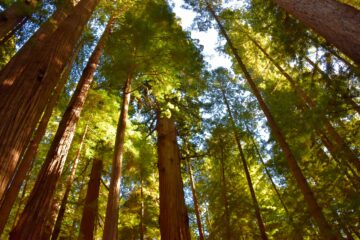
A few blocks east of downtown, adjacent to the Cal Poly Humboldt campus, the Arcata Community Forest covers 790 acres of community-owned redwood forest — the second free nature site in this Arcata travel guide. It was the first municipally owned community forest in California, and it is the other half of what makes Arcata special: a real redwood forest you can walk into from town, with trails for hiking, mountain biking, and horseback riding.
The Arcata Ridge Trail is a 4.5-mile regional trail linking the north and south ends of town, and the South Fork Janes Creek Trail is a 2-mile loop. Access is from Redwood Park at the east ends of 11th and 14th Streets, or from Fickle Hill Road. The forest is closed from sunset to sunrise, there is no camping, and dogs must be on leash at all times. Avoid very wet trails after rain. Trail maps and access points are on the City of Arcata trail maps page.
Beaches: Mad River and Clam Beach
Mad River Beach County Park, about five miles northwest of downtown where the Mad River meets the Pacific, is the beach stop in this Arcata travel guide: a wide, often-empty sandy beach with dunes, a boat launch, picnic tables, and restrooms. Day use is free, leashed dogs are welcome, and the parking lots close one hour after sunset until sunrise. It is a beach for strolling rather than sunbathing, like most of the North Coast, and that is part of its appeal.
Clam Beach, seven miles north of town, is the northern trailhead of the 5.5-mile Hammond Trail, a multi-use hiking, biking, and horseback trail running from the Mad River Bridge to Clam Beach County Park in McKinleyville. The paved 4.3-mile Humboldt Bay Trail between Arcata and Eureka, part of the in-progress Great Redwood Trail, is another easy ride or walk, and it is the most practical way to get between the two towns without a car.
Cal Poly Humboldt and the Natural History Museum
The Cal Poly Humboldt campus is walkable from downtown, and its Natural History Museum at 1242 G Street is the rainy-day stop in this Arcata travel guide, with fossils, prehistoric mammals, redwood forest, and marine exhibits. The museum’s phone is (707) 826-4479. Hours and admission were not listed on the museum’s own homepage, so check current hours and admission on the Natural History Museum site before you go. The Visit California Arcata page covers the plaza, marsh, forest, beaches, campus, events, where to stay, and how to get there, and the Visit Humboldt Arcata page covers the marsh, the Hammond Trail, restaurants, the farmers market, and the North Country Fair.
Events and the Best Time to Go: An Arcata Travel Guide Calendar
Arcata’s calendar is worth planning around. The Kinetic Grand Championship, a three-day human-powered sculpture race from Arcata to Ferndale, runs in late May and started in 1969. The North Country Fair, a zero-waste craft and food festival held annually since 1974, runs in September; the 52nd annual fair was September 19 and 20, 2026. The Arcata Bay Oyster Festival and the Arcata Fairy Festival both run in June.
The best weather in this Arcata travel guide runs from early July to early September, peaking in the first week of August. Temperatures typically run from 41 to 67 degrees year-round, with an August average high of about 66 to 68 degrees and a December average low of about 41. August is the clearest month, January the cloudiest, and December the wettest, with about 8.9 inches of rain. Expect marine-layer fog and cool weather even in summer. Beaches here are for strolling, not sunbathing.
Getting There and Where to Stay
Eureka is about 6 to 7 miles south, a 10- to 15-minute drive on US 101, and the first day trip in this Arcata travel guide. Trinidad is 16 miles north. Prairie Creek Redwoods State Park is about a 40-minute drive, and the southern boundary of Redwood National and State Parks near Orick is about 45 minutes north. Redding is about three hours via State Route 299, the Trinity Scenic Byway, which begins at US 101 in Arcata, though that drive time is approximate rather than official.
For lodging, stay near the plaza: the historic Hotel Arcata has stood on the plaza since 1915 and is on the National Register of Historic Places, and the Front Porch Inn is a river-stone-and-redwood bed-and-breakfast. Name-brand options in town include the Hampton Inn and Suites Arcata, the Best Western Arcata Inn, and the Comfort Inn Arcata. Check current rates before you book, as no prices were verified for this guide. For the redwoods day trip north, see the Prairie Creek Redwoods guide and the Jedediah Smith Redwoods guide; for the nearest city south, the Eureka guide.
Practical Tips for Your Arcata Travel Guide
- Dogs: Leashed dogs are allowed at the Arcata Marsh and at Mad River Beach, and must be on leash at all times in the Community Forest. The forest is closed from sunset to sunrise, with no camping.
- Parking: Park near the plaza and walk. Mad River Beach parking lots close one hour after sunset until sunrise.
- Money: The marsh, the community forest, and the beaches are all free. The Natural History Museum’s admission was not verified, so check current pricing before you go.
- One thing to skip: The Samoa Cookhouse, a historic lumber-camp cookhouse across the bay in Samoa, has conflicting reports about its current status, with some sources saying temporarily closed for renovations and others saying permanently closed. Do not plan a meal there without checking its current status first.
FAQ
Is Arcata worth visiting? Yes. It is a walkable college town pairing a historic plaza and Saturday farmers market with two standout free nature sites, the 307-acre marsh and the 790-acre community forest, and redwoods and beaches minutes away.
How many days do you need in Arcata? One full day covers the plaza and market, the marsh, and the community forest — the core loop of this Arcata travel guide. Add a second day for a redwoods day trip, with Prairie Creek about 40 minutes away, and the coast.
When is the best time to visit Arcata? Early July to early September for the driest, clearest weather, peaking in the first week of August. Expect fog and cool temperatures, with highs around 66 degrees, even in summer, and heavy rain in winter.
Is the Arcata Marsh free, and can I bring my dog? Yes. Admission is free, the trails are open from sunrise to one hour after sunset, and leashed dogs are allowed on the roughly five miles of paths.
How far is Arcata from Eureka and the redwoods? Eureka is about 6 to 7 miles south, a 10- to 15-minute drive. Prairie Creek Redwoods State Park is about a 40-minute drive north, and the southern boundary of Redwood National and State Parks near Orick is about 45 minutes away.
Arcata is the rare North Coast town that is easy to visit without a car once you arrive, and the rare college town that takes its marsh and its forest as seriously as its campus. Use this Arcata travel guide for a slow day on the plaza and the trails, and let the redwoods do the rest.